

NAVIGATION / FIELD HISTORY
The Wrist Compass: A Field History
From wartime wrist instruments and underwater navigation to the enduring logic of putting direction where it can be read at a glance.
READ THE STORY →REDUX & CO. / FIELD STATION
Stories, field notes and practical guides on instruments, materials, navigation and the ideas behind the things we carry.
DIGITAL / FIELD NOTES
From a lost Seiko Contra module to positive-LCD legibility testing: why SCOUT-D treats digital timekeeping as a purpose-built instrument, not a miniature smartwatch.
READ THE STORY →
NAVIGATION / FIELD HISTORY
From wartime wrist instruments and underwater navigation to the enduring logic of putting direction where it can be read at a glance.
READ THE STORY →
MATERIALS / FIELD GUIDE
How titanium moved from aerospace-era engineering to the wrist—and what Grade 2, Grade 5, mass, corrosion and finishing actually mean.
READ THE GUIDE →
DESIGN / INSTRUMENTS
Why reducing size can improve comfort, legibility and the basic job of a field instrument.
READ FIELD NOTES →
DESIGN / MODULARITY
A practical look at separating functions into interchangeable instruments instead of asking one device to do everything.
READ FIELD NOTES →
DESIGN / HISTORY
Why the original 39 mm COURG rejected oversized pilot-watch proportions—and what changed when the instrument evolved to 42 mm.
READ THE STORY →
DESIGN / HISTORY
From the Berlin Airlift to the aircraft clock: how mission-critical cockpit design shaped the thinking behind HONNR.
READ THE STORY →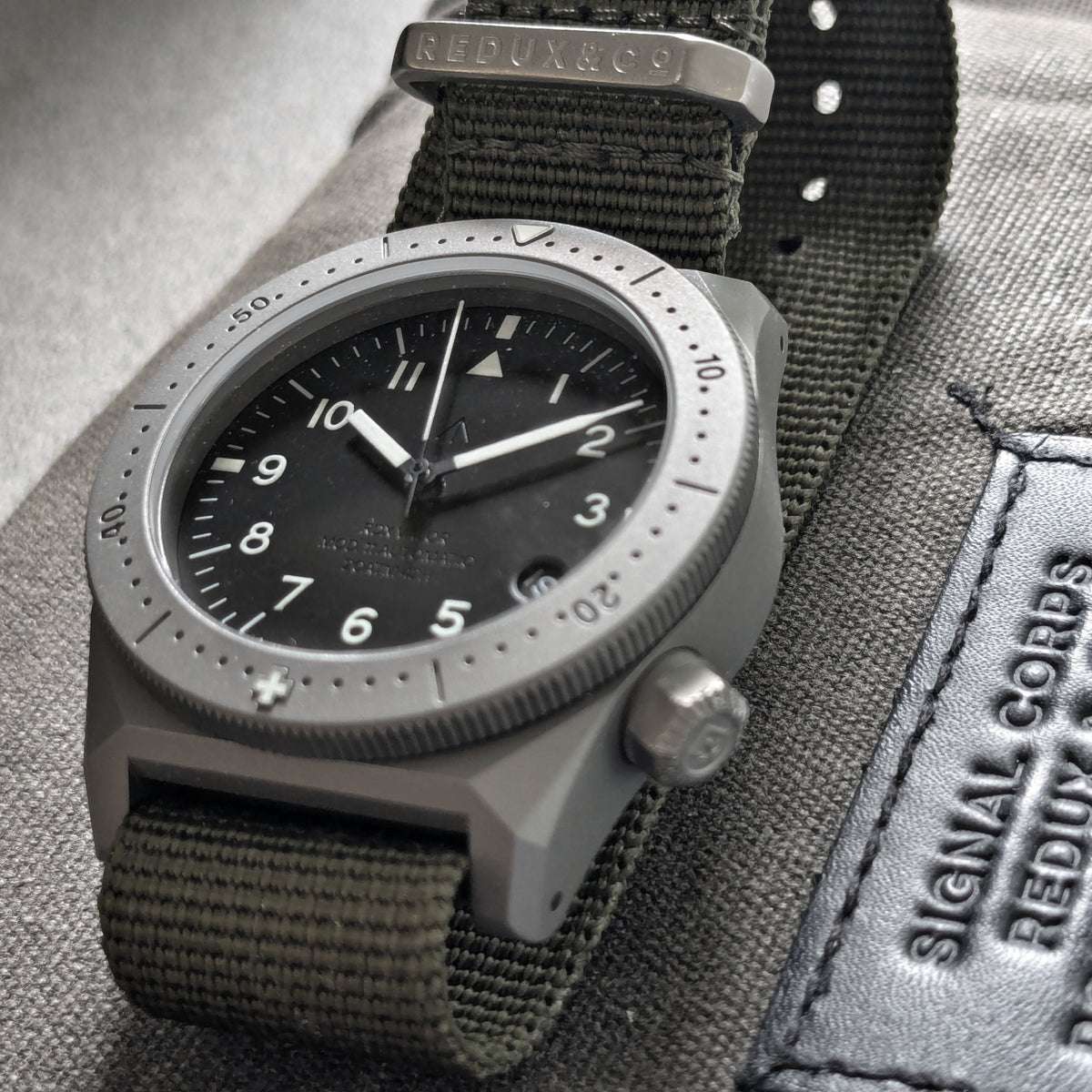
DESIGN / MILITARY HISTORY
From RAF navigation watches and asymmetric military chronographs to a modern Grade 5 titanium instrument shaped by the job.
READ THE STORY →
BEHIND THE INSTRUMENT
The constraints and design decisions behind a compact system built around time, direction and choice.
READ THE STORY →